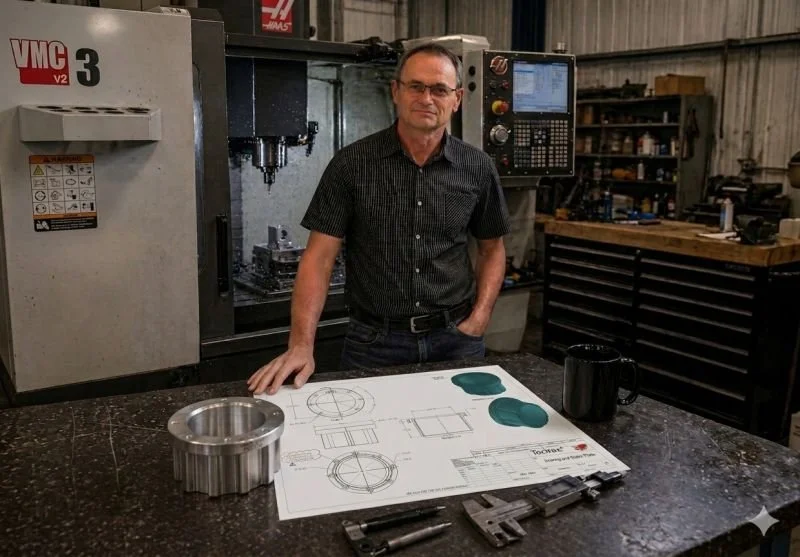
“Your Drawing Is a Contract…Between Design and Reality.”
Most people treat drawings as a formality.
Something you produce at the end of a project to “tick the box.”
That mindset is where things start going wrong.
A good drawing isn’t documentation.
And like any contract, if it’s vague… it gets interpreted.
I’ve seen it too many times:
“That dimension wasn’t critical, so we left it off.”
Workshop guesses → parts don’t fit
“The welder will know what to do.”
Different welder, different result
“It’s obvious from the model.”
The model isn’t on the shop floor
Here’s the uncomfortable truth:
If it’s not on the drawing, it doesn’t exist.
If it’s unclear, it will be interpreted.
If it’s overcomplicated, it will be ignored.
The best drawings I’ve seen all have the same traits:
• Intent is obvious (not just geometry)
• Critical features are controlled, everything else is relaxed
• Manufacturing is considered, not assumed
• No room for interpretation where it matters
A drawing should answer every question before it’s asked.
Because every question asked on the workshop floor costs time.
And every assumption costs money.
If your project has ever gone over budget or needed rework…
There’s a good chance the issue started here.
Good drawings don’t just describe a part.
They control the outcome.